Easy Pho (Vietnamese Noodle Soup)
Pho is awesome. Delicious starchy long noodles in a rich broth with strips of beef or chicken. Its fun to eat, filling and induces a wonderful sensation called pho coma, a wonderful warm satisfying feeling of fullness, caused by a full belly of starch and broth, and makes you want to stretch out in your favorite chair and take a nap. An inattentive victim of pho coma will find themselves dozing off at work. There are different types of pho, generally described by meat, and this version is beef, but the principles are pretty much the same for any type. The recipe below was faked up based on what I have had at restaurants and is close enough to be pretty yummy.
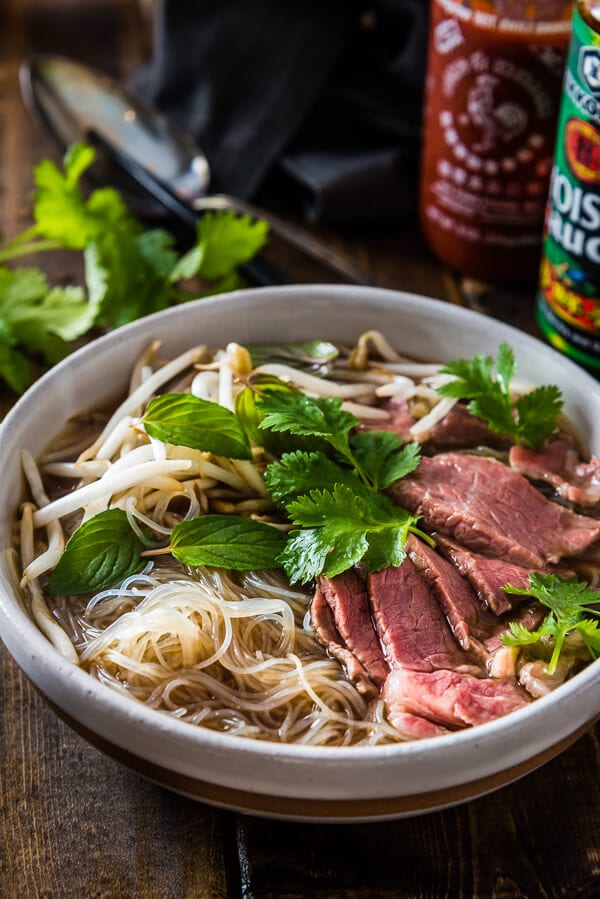
Pho is awesome. Delicious starchy long noodles in a rich broth with strips of beef or chicken. Its fun to eat, filling and induces a wonderful sensation called pho coma, a wonderful warm satisfying feeling of fullness, caused by a full belly of starch and broth, and makes you want to stretch out in your favorite chair and take a nap. An inattentive victim of pho coma will find themselves dozing off at work. There are different types of pho, generally described by meat, and this version is beef, but the principles are pretty much the same for any type. The recipe below was faked up based on what I have had at restaurants and is close enough to be pretty yummy.
- 225 grams rice noodles narrow to medium broad
- 225 grams beef (steak) cut to thin strips
- 225 grams fresh mung bean sprouts washed and drained
- 2 green onions washed and diced
- 10 ml dried chilies, dried
- 30 ml cilantro flakes
- 5 ml garlic powder
- 3 litres water (noodles) boil in large pot
- 2 litres water (soup broth) boil in medium pot
- 60 ml beef soup powder
- 60 ml chicken soup powder
- 45 ml carrot, shredded (optional)
- 1 small onion fine diced (optional)
- 3 medium mushrooms sliced thin (optional)
- 30 ml oil (optional)
- Carbohydrate 65.9337333333333 g
- Cholesterol 0 mg
- Fat 9.99258980949161 g
- Fiber 2.03666668613752 g
- Protein 3.57586666666667 g
- Saturated Fat 0.752020267162665 g
- Serving Size 1 1 Serving (136g)
- Sodium 139.933333333333 mg
- Sugar 63.8970666471958 g
- Trans Fat 0.518811818284297 g
- Calories 373 calories
Step-by-step
- (optional) - Finely dice the onion. Heat a medium-sized pot to high, add onion and stir until scorched. This piece is optional but is used to add a "pot-au-feu" flavor to the soup.
- Add 2 liters of water to the medium pot and bring to a boil. When boiling, add soup powder, crushed dried chili peppers, garlic powder, and Cilantro flakes and reduce heat.
- Start 3 liters of water boiling in a large pot for the noodles. This will take some time to come to a boil. Add noodles and cook as per instructions. Drain, rinse and divide into bowls immediately to prevent sticking.
- Slice the beef in to thin strips across the grain.
- Wash and dice green onions; wash been sprouts.
- (optional) - If the extra vegetable are being used: wash and slice mushrooms, peel and shred the carrot.
- When broth boils, add beef and stir for 3-5 minutes (depending on how well cooked you prefer).
- Divide the meat across the bowls.
- Add bean sprouts, green onions and mushrooms.
- Add the rest of the broth to the bowls.
- Sprinkle the shredded carrot on top the soup and serve.
Replacing fresh beef bones with powdered beef and chicken soup bases cuts preparation time down to thirty minutes without requiring a stockpot to simmer for six hours. Standard tap water works fine for the base, provided the mineral content is balanced by proper seasoning. Two pots are necessary for this method: a large vessel holding three liters of water for the starches and a medium pot holding two liters for the liquid base. Simultaneous boiling requires careful burner management on a standard stovetop.
Slicing the steak into thin strips across the muscle fibers ensures tenderness when submerged in the hot liquid. Cut the protein while it remains partially frozen to achieve uniform thickness under five millimeters. Once the noodles finish boiling in the large pot, rinse them immediately under cold running water to halt the cooking process and wash away excess surface starch that causes clumping.
Leftover portions store safely in an airtight container in the refrigerator for up to three days, but keep the noodles separate from the liquid base during storage to prevent them from absorbing excess moisture and turning mushy. Reheat the liquid base separately on the stove until simmering before pouring it over the cold noodles and meat.



