Steamers Clam Chowder
I once owned a summer cottage on Sawyers Island in Maine. The little cove in front of the house, too small to be named on navigational charts, was called Clam Cove by the locals. I never did any clamming fishing was my thing but I have a vivid memory of the muddy flats at low tide, feeling the soft-shell clams under my feet and seeing their tiny sprays coming out of the mud as they burrowed down to get out of my way. Soft-shell clams have two oval shells, about two to three inches long, that gape along the edges. Their most prominent feature is a siphon, about a quarter of the length of the shell, which sticks out of the clam. Whole soft-shell clams are often referred to as steamers, because that is the way they are most often prepared. When salty old-timers refer to clams, soft-shells are what they mean. Shucked raw, soft-shell clams may be called fryers or frying clams. Frying clams make a superb chowder, but they are very expensive because of the labor involved in shucking them. I prefer to steam whole soft-shell clams for chowder. That way, I save a few dollars and get a fantastic broth in the process. The flavor of steamer broth is sweeter and more subtle and round than the pungent broth quahogs hard-shell clams yield. The chowder made from steamers may have a little less strength up front, but it is equal to quahog chowder in deep lingering flavor. To celebrate the difference, I use salt pork instead of bacon in steamer chowder, I dont add garlic, and I use fewer herbs and seasoning, letting the luscious little clams provide most of the flavor. And they always rise to the occasion, producing one of the most delicious chowders imaginable.
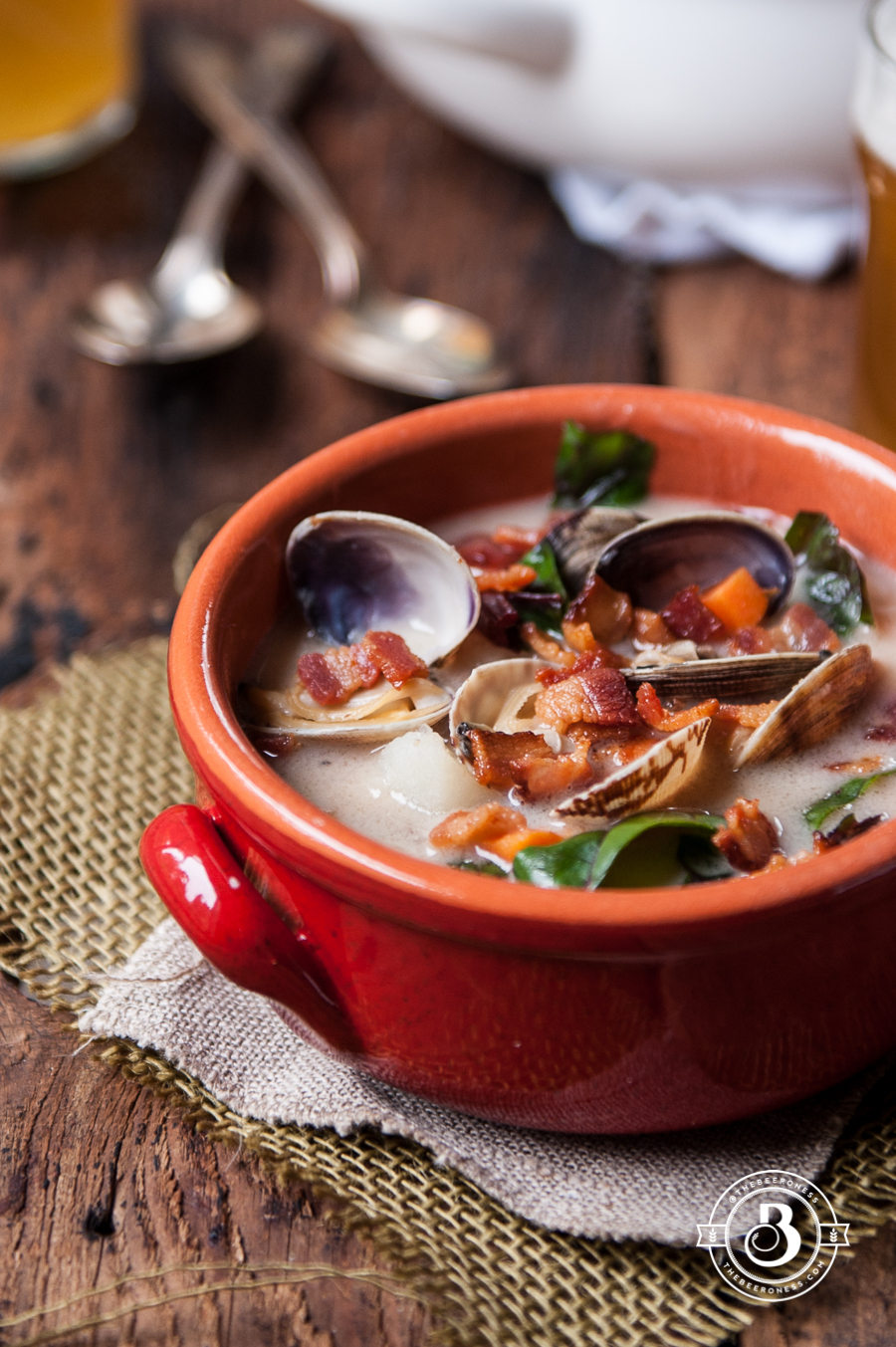
I once owned a summer cottage on Sawyers Island in Maine. The little cove in front of the house, too small to be named on navigational charts, was called Clam Cove by the locals. I never did any clamming fishing was my thing but I have a vivid memory of the muddy flats at low tide, feeling the soft-shell clams under my feet and seeing their tiny sprays coming out of the mud as they burrowed down to get out of my way. Soft-shell clams have two oval shells, about two to three inches long, that gape along the edges. Their most prominent feature is a siphon, about a quarter of the length of the shell, which sticks out of the clam. Whole soft-shell clams are often referred to as steamers, because that is the way they are most often prepared. When salty old-timers refer to clams, soft-shells are what they mean. Shucked raw, soft-shell clams may be called fryers or frying clams. Frying clams make a superb chowder, but they are very expensive because of the labor involved in shucking them. I prefer to steam whole soft-shell clams for chowder. That way, I save a few dollars and get a fantastic broth in the process. The flavor of steamer broth is sweeter and more subtle and round than the pungent broth quahogs hard-shell clams yield. The chowder made from steamers may have a little less strength up front, but it is equal to quahog chowder in deep lingering flavor. To celebrate the difference, I use salt pork instead of bacon in steamer chowder, I dont add garlic, and I use fewer herbs and seasoning, letting the luscious little clams provide most of the flavor. And they always rise to the occasion, producing one of the most delicious chowders imaginable.
- Carbohydrate 21 g(7%)
- Cholesterol 111 mg(37%)
- Fat 22 g(35%)
- Fiber 2 g(9%)
- Protein 30 g(61%)
- Saturated Fat 11 g(56%)
- Sodium 1415 mg(59%)
- Calories 411
Step-by-step
- Fill two large pots (or two sinks) with cold water. Place the clams in one pot of water, discarding any dead ones or clams with cracked shells. Gently move them around in the water and let them soak for a few minutes, then lift them out and place them in the other pot of cold water. Rinse the first pot and fill it again. Move the clams around again, then transfer them back to the clean pot. Continue to switch the clams back and forth, letting them soak for a few minutes each time, and then lifting them out of the pot, until the water remains crystal clear. The process should take four or five soakings.
- Put the 2 cups water in an 8-quart pot, cover, and bring to a rolling boil. Quickly but gently place the clams in the pot and cover again. After 4 minutes, remove the lid and quickly stir the clams with a wooden spoon, trying to lift some of the clams from the bottom to the top so they will cook evenly but be gentle, the shells are very brittle and crack easily. Cover and continue to steam for another 4 to 5 minutes. (The broth will most likely overflow just as the clams have finished cooking.) All the clams should be open; if not, steam them a minute or two longer. Remove the clams and strain the broth; you should have 4 cups.
- When the clams are cool, remove them from the shells and cut off the siphons, as well as the protective skin that covers each siphon, and discard. (You should have about 1 pound of clam meat.) Cover and refrigerate until later.
- Heat a 4- to 6-quart heavy pot over low heat and add the diced salt pork. Once it has rendered a few tablespoons of fat, increase the heat to medium and cook until the pork is crisp and golden brown. With a slotted spoon, transfer the cracklings to a small ovenproof dish, leaving the fat in the pot, and reserve until later.
- Add the butter, onion, celery, thyme, and bay leaves to the pot and sauté, stirring occasionally with a wooden spoon, for about 10 minutes, until the vegetables are softened but not browned.
- Add the potatoes and the reserved clam broth. The broth should just barely cover the potatoes; if it doesn't, add enough water to cover them. Turn up the heat and bring to a boil, cover, and cook the potatoes vigorously for about 10 minutes, or until they are soft on the outside but still firm in the center. If the broth hasn't thickened lightly, smash a few potatoes against the side of the pot and cook a minute or two longer to release the starch.
- Remove the pot from the heat. Stir in the clams and the cream and season to taste with black pepper and possibly a pinch of salt (the saltiness of steamers varies). If you are not serving the chowder within the hour, let it cool a bit, then refrigerate; cover the chowder after it has chilled completely. Otherwise, let it sit at room temperature for up to an hour, allowing the flavors to meld.
- When ready to serve, reheat the chowder over low heat; don't let it boil. Try not to stir too often, because you don't want to break open the clam bellies. Warm the cracklings in a low oven (200°F) for a few minutes.
- Ladle the chowder into cups or bowls, making sure that the steamers, onions, and potatoes are evenly divided. Scatter the cracklings over the individual servings and sprinkle with the chopped parsley and minced chives.
A Taste of the Maine Coast: My Steamer Clam Chowder
The salty air, the cry of gulls, the rhythmic crash of waves against the rocks – these are the sounds and scents that instantly transport me back to my summer haven on Sawyer’s Island. My little cottage, nestled beside a cove the locals affectionately called Clam Cove, became my sanctuary, a place where the simple pleasures of life took center stage. While fishing was my passion, the memory of those muddy flats at low tide, the soft-shell clams burrowing beneath my feet, remains etched in my mind. It's a scene that perfectly encapsulates the essence of this recipe: a celebration of the simple, unadulterated flavors of the sea.
This isn't just any clam chowder; it's a testament to the unique character of soft-shell clams, often called "steamers." Unlike the more robust flavor of quahogs (hard-shell clams), steamers offer a sweeter, more subtle taste. Their delicate nature inspired me to create a chowder that mirrors their gentle essence. I forgo the strong flavors of bacon and garlic, opting instead for the delicate rendering of salt pork, allowing the clams themselves to shine. This is chowder at its purest, showcasing the natural sweetness and depth that only freshly steamed clams can provide. The subtle notes of thyme and bay leaf dance in the background, complementing, not overpowering, the star of the show.
The process itself is a labor of love, but the reward is immeasurable. The careful cleaning of the clams, the gentle steaming to coax out their flavorful broth, the precise cooking of the potatoes – every step is imbued with intention, an act of homage to the bounty of the sea. It's in these moments, as I savor each step, that I feel most connected to the island, to the land, to the very essence of what makes this dish so special. And let me tell you, the finished product? It's a symphony of flavors, a comforting embrace on a chilly evening, a slice of Maine's breathtaking beauty captured in a bowl.
More than just a recipe, this is a memory; a story of summer days, salty air, and the simple pleasure of freshly caught seafood transformed into a culinary masterpiece. It is a testament to the enduring power of tradition and the simple elegance of nature's bounty.
The beauty of this chowder lies in its simplicity. The subtle sweetness of the clams sings as the creamy broth warms the soul. Each bite is a journey, a reminder of quiet afternoons spent on the coast, the gentle rhythm of the tide, and the pure magic of freshly caught seafood. It is a recipe I cherish, not just for its incredible taste, but for its ability to transport me back to those cherished moments in Clam Cove. It is a taste of home, a taste of Maine, a taste of summer.
I encourage you to try this recipe. But more than that, I encourage you to experience the journey. To slow down, to appreciate the process, to savor the moments. For in the making of this chowder, just as in life, the journey is as rewarding as the destination.



