Sauage a la Foil
This is based on a camping recipe which used hamburger and no veggies. It can be done on the campfire, on the grill, or in the oven.
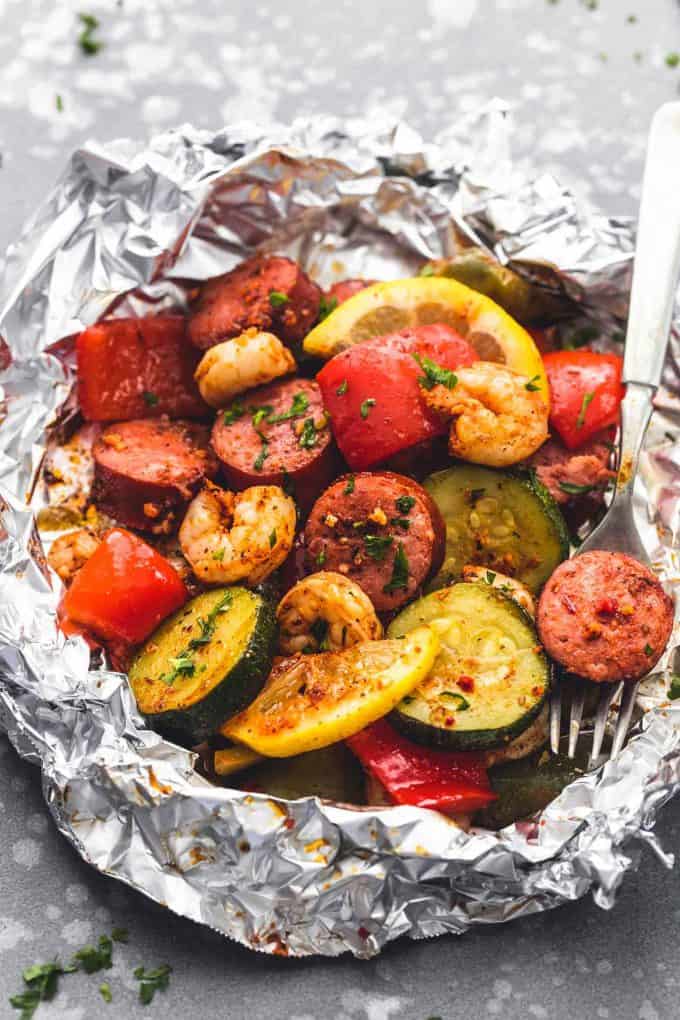
This is based on a camping recipe which used hamburger and no veggies. It can be done on the campfire, on the grill, or in the oven.
- Carbohydrate 282.371350633 g
- Cholesterol 143.72067285 mg
- Fat 72.6625705255 g
- Fiber 61.7372003536224 g
- Protein 79.954855463 g
- Saturated Fat 23.71822370905 g
- Serving Size 1 1 Serving (2104g)
- Sodium 2468.27194995 mg
- Sugar 220.634150279378 g
- Trans Fat 11.31184888615 g
- Calories 2010 calories
Step-by-step
- Lay out two large squares of foil, and butter them.
- Slice the potatoes and sausage, and arrange them on the buttered foil.
- Add the vegetables and the pepper.
- Wrap up the foil by rolling the edges together so you make 2 pouches of food.
- Place the foil pouches in the embers of a campfire, on a grill, or in an oven heated to 400 F.
- Cook for 20 minutes, flip, and cook another 20 minutes.
Enclosed foil packets create a micro-environment where steaming and roasting happen simultaneously. Sealing the edges tightly traps moisture released by potatoes and frozen vegetables, which prevents the smoked sausage from drying out during forty minutes of total cooking time at 400 degrees Fahrenheit. Budget-conscious cooks benefit from using bulk smoked sausage, which typically costs less per pound than pre-portioned links and adapts easily to various dietary needs.
Dietary Adjustments and Ingredient Efficiency
Modifying this preparation for different nutritional requirements is straightforward. Replace the smoked sausage with cubed firm tofu or seitan at a one-to-one volume ratio for a plant-based variation. Standard dairy butter can be swapped for olive oil at a ratio of one tablespoon per pat to accommodate dairy restrictions without losing the fat needed to conduct heat against the aluminum foil. Frozen broccoli, cauliflower, and carrots function well because they release steady moisture as they thaw, though fresh root vegetables cut to uniform quarter-inch thickness perform identically.
Storage and Secondary Meals
Leftover cooked pouches keep safely in an airtight container in the refrigerator for up to three days. Repurposing these ingredients requires minimal effort. Dice the chilled potatoes and sausage, then crisp them in a hot skillet for breakfast alongside eggs.



